
Views: 0 Author: Site Editor Publish Time: 2025-11-07 Origin: Site
A good Christmas market tent is the base of a safe and winning winter stall. For sellers, picking the right tent makes sure goods, staff, and visitors stay comfy in cold, windy, or snowy weather. In 2025, main buy needs include fire-fight fabrics, fast set frames, and certified wind work that fit public-market safe rules.
Street markets in December put sellers in freezing cold and windy changes. Low canopies often fall, leak, or lose shape under snow. Aluminum tents with sealed joints and tight roofs stay steady. They cut heat loss. They make a nicer feel for buyers. A safe, bright stall keeps people looking longer. It helps sellers sell more.

When picking a tent, check a few real points:
1. Frame material: aluminum (such as 6061-T6 alloy) fights rust and is easy to move. It fits repeat sets.
2. Fabric work: PVC-coated polyester that passes EN 13501-1 or NFPA 701 fire tests, meets European and U.S. event rules.
3. Wind rating: pick builds tested for at least 80 km/h wind loads, as verified in LP OUTDOORS engineering data.
4. Ease of set: quick-release pins, block parts, and wheel bags let small teams put up in minutes.
Different market areas need different builds. Small sellers want an easy move. Bigger groups focus on the room and look.
A 3 × 3 m pop-up canopy with sidewalls is the best setup for single stalls. The fold truss design opens fast. Detach sidewalls guard against wind and light rain.
Small 3×3 m units fit coffee or pastry sellers. Longer 3×6 m models hold two sellers or an extra store. Both fold neatly into wheel carry bags. They fit in standard cars.
An aluminum frame is light enough for two people to carry without tools. It stays firm under tight fabric.
Feature | Specification |
Frame | 6061-T6 aluminum, 40 mm legs |
Fabric | PVC-coated, fire-retardant |
Setup | Quick assembly by two people |
Typical use | Food, handcrafts, gifts |
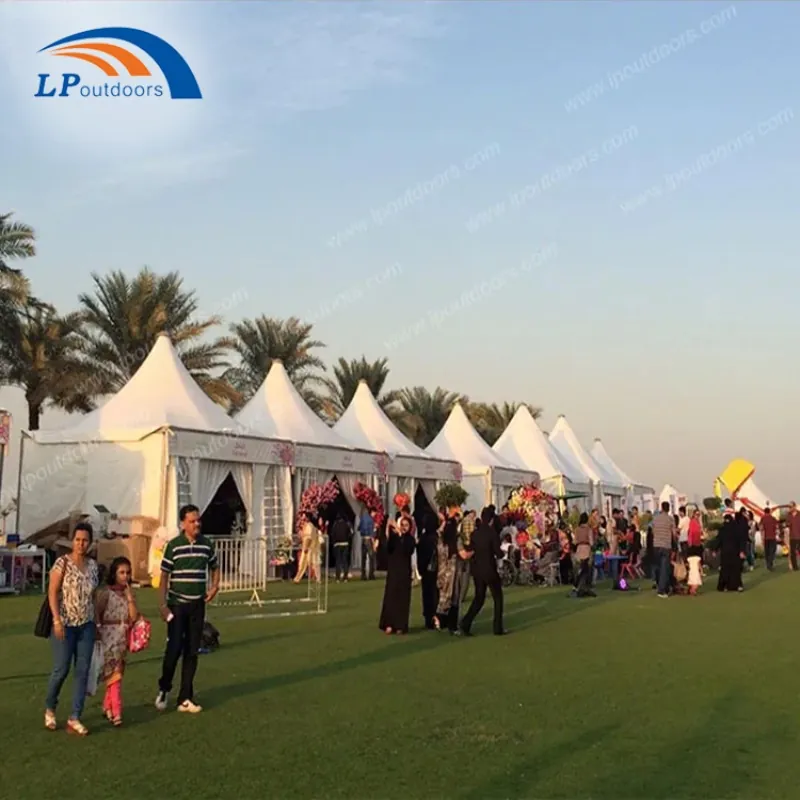
Pagoda tents have pyramid roofs that stand out in holiday streets. Put at entries or squares, they draw eyes and give a pro look.
Clear PVC roof panels show inside lights at night. They fit well with Christmas decor. Many pagodas can join with gutter systems for covered paths in big market plans.
For big market areas, A-frame marquees give open interiors and grow in width. Block 5 m bays with built gutters let easy grow and good water run.
Their open rooms fit group seat spots, show stages, and multi-seller halls. A roof slope of about 18 degrees helps snow slide. Strong beams remain steady in long winter use.
Season events need not just charm but build trust. Regular looks and right tie-down guard stall and public.
Many local groups set a minimum 80 km/h wind rating for temp builds.
Recommended anchoring methods:
1. Concrete surfaces: water weights or steel base plates.
2. Soil or gravel: deep screw anchors.
3. Snowy sites: extra tie-down straps for lift fight.
Check bolts and tighten daily. The right tie-down keeps the near stalls safe on gusty nights.
A higher roof (around 18° or more) cuts snow pile on its own. Built gutters send melt water away from doors. In heavy snow, clear the roof now and then. Keep the inside air open to stop a wet freeze.
After events, dry covers fully before storing. This stops cracks. It makes PVC last well past five years of season use.
A tent's plan and light change buyers feel as much as its strength. Sellers can mix job and holiday with easy design picks.
Use warm-white LED rope lights over rafters and small spots on main goods to show feel and shades. Clear windows bring daylight. They keep the wind out.
Practical design reminders:
1. Put signs at a height of 1.6 m for clear sight.
2. Match red, gold, and neutral shades for holiday warmth.
3. Keep at least 1.2 m paths for safe buyer movement.

Small changes can stop costly harm and make gear last.
Make sure gutters stay open. Dry canopies are full before packing. Heat-weld seams on PVC fabrics block water in. But trapped wet can grow mold if stored damp. Roll—not fold—to skip creases. Add a silicone guard once a season. This keeps bending easily.
Use insulated floors with fire-fight sidewalls to hold heat. Put heaters on steady, dry spots. Check power cords often. Small CO checkers and no-slip mats meet most European winter-market safety rules. This raises comfort for sellers and buyers.
For runners needing tested, long-use fixes, LP OUTDOORS makes block aluminum tents made for winter strength. Each design gets a wind-load test at 80 km/h. It uses certified fire-fight PVC.
The LP OUTDOORS 3X3m Outdoor Promotion Pop Up Canopy For Show and 3×6 m Pop Up Canopy uses a pin-lock system for fast put-up. It has optional sidewalls and window panels. A wheel carry bag makes moving between towns easy.
For bigger markets, the 5X5m Pagoda tent for outdoor wedding and party and 10×20 m A-Frame Marquee give 5 m block grow, clear-roof picks, and built gutters. Wind fight hits 80 km/h. It has a 5-year frame and a 3-year fabric warranty. This fits multi-season business use.
A: Public-event tents should withstand at least 80 km/h winds. Structures verified to this level remain stable when properly anchored and maintained.
A: Yes. Authorities typically require compliance with EN 13501-1 or NFPA 701 standards. Certified fabrics simplify inspection and ensure visitor safety.
A: The 3×3 m version suits single stalls and mobile setups, while the 3×6 m provides more display and storage room for shared booths.
A: Combine portable heaters, air curtains, and insulated flooring. Maintain airflow to avoid condensation, following clearance guidelines for heater placement.
A: LP OUTDOORS produces aluminum-frame tents tested for wind and snow loads, offering modular designs and certified fabrics trusted by market organizers worldwide.

